Response #10
In Kelsey's blog, she talks about how eating ethics varies with "the economics, religion, notions of civility, notions of pleasure, et cetera, associated with a particular culture." Then she states how vegetarianism is often viewed as ideological and meat-eating as natural. However, meat eating really is not crucial for survival of human beings and David Degrazia, among other authors in the reader, supports this. Causing pain and suffering to animals is unnecessary and should not happen just for the sake of human consumption. Only in drastic instances, like if a person is starving and there happens to be a cow the person can slaughter, is animal slaughtering and consumption justifiable. Kelsey asks, "How do you view the consumption of nonhuman animals? Is it just natural or is it ideological?"
Society plays an important role in how people act, what people say, and who people are. It seems as though if everyone is doing something than that makes it okay. However, this is usually not the case. Just because the majority of a society or culture consumes meat does not mean they are right in what they are doing. I think consuming nonhuman animals is ideological for many reasons. There is no reason for humans to consume meat other than the notion that it tastes good. We do not need meat in our diets. When weaned from meat over a period of time and finally ceasing to eat animal flesh all together, a person will have a hard time going back to such a diet because the body can not break it down. I have found, after not eating meat for quite some time, that it just does not appeal to me any longer. I have lost my desire for the taste and I have accepted that my body really does not need meat or animal products to be sustained. People are fed animal products during childhood and this is why we continue to consume nonhuman animals. I know families that have children who have never touched a piece of meat before and they are perfectly happy children. They do not desire meat; they do not even understand why a person would. It is not in the nature of a human being to want to consume animal flesh. Eating animals is a practice people are exposed to at a young age. Society does not question it and most people continue this practice throughout their entire lives. This is why people find it to be natural and part of human instinct to want meat.
I know killing animals for consumption has been practiced since cavemen existed, but now that people have many alternative food sources and know animal products are an unnecessary part of a person's diet, we can finally end this practice. However, this does not mean we will anytime soon. Meat eating is a habit that can be hard to break and telling the whole population that it's okay and even better to not eat meat will just cause problems. People do not like to change their ways. When they are so used to consuming something so tasty, they won't give it up just because it's 'wrong.' Meat eating is embedded in people's minds as being natural and instinctual for humans but this is really not the case. Carnivorous animals, like cats, have instinctual habits to hunt and prey on animals but humans have no purpose in doing so. James Rachels stated, "People generally do not respond to ethical appeals unless they see others around them also responding. If all your friends are eating meat, you are unlikely to be moved my a mere argument (262).
My question to you is: Even after knowing the affects eating factory farmed meat have on the environment and the animals, why do some people still continue to eat meat other than the reason that it simply tastes good?
Thursday, October 14, 2010

Response to "Vegetarianism and Stigmas."
Response #9
Vegetarianism has been around for centuries. The earliest records of vegetarianism go back to ancient India and ancient Greek civilizations. The vegetarian lifestyle was chosen mainly to support nonviolence towards animals and it was even promoted by religious groups as well as philosophers. It has become a more worldwide practice in the 19th and 20th centuries. In Nicole's blog, she talks about the reactions and comments vegetarians get because of their chosen lifestyle. Many people don't understand the concept because eating meat has been a part of them since birth. Nicole responded to the question of what kinds of changes vegetarianism have seen over the years and why has it changed. She talks about how vegetarians have the reputation of trying to convert meat eaters to the 'other side.' Vegetarianism is often seen as just another phase in someone's life. People become vegetarians for many reasons; for ethical reasons, religious reasons, because they don't like the taste, because of allergies, and for health reasons. People eat meat for basically one reason and that is because it may taste good to that person. She asks, "What stigmas have you experienced about meat and vegetarianism and where do you think it is all heading?"
Nicole talks about how vegetarianism can often be just a fad. Many people who become vegetarians do not stick to it. Although this may be true, at least they made an effort to not contribute to the meat industry and they actively thought about what they were consuming. Stigmas about vegetarianism and consuming meat are everywhere. Like Nicole said, people just assume tofu and other non-meat and dairy products are not tasty so they dismiss the vegetarian lifestyle before even considering it. In my life, I would see my vegetarian grandfather eat a tofu hot dog or veggie burger and I would assume it would not taste good because it couldn't possibly be like the real meat product. In actuality, they don't taste like meat but they really shouldn't be compared to animal flesh in the first place. Many people also see meat as a natural part of our everyday diet and think we need it for survival. My mother always asks me if I'm getting enough protein and pleads for me to consume more nuts and beans. There are so many ways to get protein which people do not even realize or think about.
Meat eaters are afraid vegetarians will try to convince them to change their ways and vegetarians are afraid meat eaters will criticize and interrogate them about their choices. However, the world can coexist with both lifestyles. Because a person chooses not to consume animal products does not mean their life mission is to end meat consumption as a whole (in most cases). We just need to get over these stigmas and respect each other's life choices. If a person is consciously aware of how his or her food is killed, is aware that meat is not necessary for a healthy diet, is aware of the affects the meat industry has on the environment, and is aware that eating meat usually means causing pain and suffering to animals, then at least that person is knowledgeable about what he or she is consuming.
My question to you is: Do you think the public is well aware about the practices of factory farms? If so, why aren't ways of farming changing for the better? If not, how can we get people to see how their food is being slaughtered?
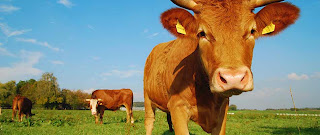
Vegetarianism has been around for centuries. The earliest records of vegetarianism go back to ancient India and ancient Greek civilizations. The vegetarian lifestyle was chosen mainly to support nonviolence towards animals and it was even promoted by religious groups as well as philosophers. It has become a more worldwide practice in the 19th and 20th centuries. In Nicole's blog, she talks about the reactions and comments vegetarians get because of their chosen lifestyle. Many people don't understand the concept because eating meat has been a part of them since birth. Nicole responded to the question of what kinds of changes vegetarianism have seen over the years and why has it changed. She talks about how vegetarians have the reputation of trying to convert meat eaters to the 'other side.' Vegetarianism is often seen as just another phase in someone's life. People become vegetarians for many reasons; for ethical reasons, religious reasons, because they don't like the taste, because of allergies, and for health reasons. People eat meat for basically one reason and that is because it may taste good to that person. She asks, "What stigmas have you experienced about meat and vegetarianism and where do you think it is all heading?"
Nicole talks about how vegetarianism can often be just a fad. Many people who become vegetarians do not stick to it. Although this may be true, at least they made an effort to not contribute to the meat industry and they actively thought about what they were consuming. Stigmas about vegetarianism and consuming meat are everywhere. Like Nicole said, people just assume tofu and other non-meat and dairy products are not tasty so they dismiss the vegetarian lifestyle before even considering it. In my life, I would see my vegetarian grandfather eat a tofu hot dog or veggie burger and I would assume it would not taste good because it couldn't possibly be like the real meat product. In actuality, they don't taste like meat but they really shouldn't be compared to animal flesh in the first place. Many people also see meat as a natural part of our everyday diet and think we need it for survival. My mother always asks me if I'm getting enough protein and pleads for me to consume more nuts and beans. There are so many ways to get protein which people do not even realize or think about.
Meat eaters are afraid vegetarians will try to convince them to change their ways and vegetarians are afraid meat eaters will criticize and interrogate them about their choices. However, the world can coexist with both lifestyles. Because a person chooses not to consume animal products does not mean their life mission is to end meat consumption as a whole (in most cases). We just need to get over these stigmas and respect each other's life choices. If a person is consciously aware of how his or her food is killed, is aware that meat is not necessary for a healthy diet, is aware of the affects the meat industry has on the environment, and is aware that eating meat usually means causing pain and suffering to animals, then at least that person is knowledgeable about what he or she is consuming.
My question to you is: Do you think the public is well aware about the practices of factory farms? If so, why aren't ways of farming changing for the better? If not, how can we get people to see how their food is being slaughtered?

Thursday, October 7, 2010
Killer Cali and Morals.
My cat's name is Cali but she is usually called "Killer Cali" in my family because of her love for hunting and preying upon any animal smaller than her. She is free to go outdoors or come inside whenever she wants and her bowl is always full of cat food. However, this does not stop her from killing all sorts of birds, chipmunks, squirrels, rabbits, frogs, and any other backyard creature she can find. She has been found tossing her half dead prey in the air, letting it try to escape, and then stopping it with her paw. She does not just kill animals, she eats almost every part. I have found eyeballs, torn legs, and other random animal parts in my yard. Whenever my family sees her stalking an animal, we bring her inside and tell her that what she is doing is wrong, even though we know she does not really understand this concept. We have even tried to put collars with bells on her so the animals can be warned but she has learned to walk without making a sound and also how to remove the collar outside so we can not find it. We have attempted to keep her in to the confines of my house but she always ends up going right back outside. My instinct is to stop her from hurting and killing other animals because my morals say this is wrong, but it is in her nature to want to hunt even if she is not hungry for food. Cats are carnivores, after all.
So, should humans stop animals from preying on other species? I don't think so. At first I want to say yes because I can not morally justify the killing of animals by human beings. In the case of my cat, I would be more apt to stop her because she is provided for and there is no reason for her to kill. But, in the wild, to save an animal from its predator is to disrupt the food chain. This could jeopardize an animal's ability to provide for his or herself. Now, I wonder if animals know the difference between right and wrong. With domesticated animals, especially dogs, we teach them this. But, without being taught, I wonder if an animal is able to realize he or she is doing something wrong and has the will power / ability to stop. Human beings have morals, even if they may difference between two people, but we still have them. Humans know right from wrong in almost every situation. Even though we may not always do what is right, we are still aware of the effects our choice has on something or someone. Are animals the same way? How can we know?
My question is: Do animals have a set of their own morals and how can/have human beings even observe(d) this?
Is she really a killer or is she just following her instincts?
.JPG)
So, should humans stop animals from preying on other species? I don't think so. At first I want to say yes because I can not morally justify the killing of animals by human beings. In the case of my cat, I would be more apt to stop her because she is provided for and there is no reason for her to kill. But, in the wild, to save an animal from its predator is to disrupt the food chain. This could jeopardize an animal's ability to provide for his or herself. Now, I wonder if animals know the difference between right and wrong. With domesticated animals, especially dogs, we teach them this. But, without being taught, I wonder if an animal is able to realize he or she is doing something wrong and has the will power / ability to stop. Human beings have morals, even if they may difference between two people, but we still have them. Humans know right from wrong in almost every situation. Even though we may not always do what is right, we are still aware of the effects our choice has on something or someone. Are animals the same way? How can we know?
My question is: Do animals have a set of their own morals and how can/have human beings even observe(d) this?
Is she really a killer or is she just following her instincts?
.JPG)
Response to "Pet Keeping verses Zoos."
Response #8
In Nicole's blog, she questions whether it is moral to keep pets. She mentions a song where the lyrics talk about locking pets up because they are beautiful and controllable. The song makes the listener feel like it is directed towards him or her. It makes the listener question how a dog or cat feels as the pet. If a person locked up another human, he or she would be very unhappy and this would be seen as morally wrong and in most cases illegal. However, this is what we do to animals so Nicole questions how this can be better justified. Usually, 'owners' love their pets and most households feel incomplete without them. Nicole wonders when the pets get a say as to how they live their lives. A lot of animals are treated well as pets and given some freedoms, but many are not and are often abused or abandoned. However, if an animal had the chance to run or fly away from their 'owner', then I don't really see how keeping it alright if it is against the will of the animal. Then Nicole brings up the topic of zoos. She asks, "Do you think there is any defense to be made for zoos and keeping animals in cages?"
My answer is: Not really. What Nicole mentioned about protecting endangered animals or giving them a home if they are abandoned is about the only reasons for having zoos in the first place. Zoos can also be educational because people actually get to see the animals and learn about them at the same time. It is exciting for a child and even adults to see an elephant or tiger in person. The animals kept in zoos are given substantial food and shelter; they are provided for. However, this takes away from their natural abilities to fend for themselves. Often, cages are dirty and animals should not be taken out of their natural habitats. This is a violation of their natural rights to be free (well, they should have the natural right to be free).
When I think of zoos, I think of Big Brother (the reality TV show) where cameras surround the people all day and night. They are constantly being watched, just like animals in zoos. Many of the animals may not pay any attention to the onlookers or may be used to it since it is a daily ritual, but it is still kind of creepy. I know I wouldn't want my every move observed, that's for sure. We can never fully know how animals feel behind glass/bars, but if it is anything like how humans would feel, then they must think they are in a prison. This comes back to my previous post about how much space an animal has the right to. Wild animals should not be put in cages. They should not be tamed just for human entertainment. Having pets (such as dogs and cats) is acceptable, in my opinion, as long as humans give them a lot of living space and freedoms. My cats are free to come inside or go outside and eat when they are hungry. My dog roams the back yard although he is fenced in. I do not agree with keeping birds and other caged pets like hamsters because they are so greatly contained and birds are meant to be able to fly. If a human is unable to care for the pet and has to put it in a cage half of the time, then they should not be a pet owner. No one deserves to be locked in a cage.
My question to you is: Do you think zoos will always exist or will they be done away with if more people see the ethical dilemma of keeping animals confined to certain spaces and having them on display for all the world to see?

In Nicole's blog, she questions whether it is moral to keep pets. She mentions a song where the lyrics talk about locking pets up because they are beautiful and controllable. The song makes the listener feel like it is directed towards him or her. It makes the listener question how a dog or cat feels as the pet. If a person locked up another human, he or she would be very unhappy and this would be seen as morally wrong and in most cases illegal. However, this is what we do to animals so Nicole questions how this can be better justified. Usually, 'owners' love their pets and most households feel incomplete without them. Nicole wonders when the pets get a say as to how they live their lives. A lot of animals are treated well as pets and given some freedoms, but many are not and are often abused or abandoned. However, if an animal had the chance to run or fly away from their 'owner', then I don't really see how keeping it alright if it is against the will of the animal. Then Nicole brings up the topic of zoos. She asks, "Do you think there is any defense to be made for zoos and keeping animals in cages?"
My answer is: Not really. What Nicole mentioned about protecting endangered animals or giving them a home if they are abandoned is about the only reasons for having zoos in the first place. Zoos can also be educational because people actually get to see the animals and learn about them at the same time. It is exciting for a child and even adults to see an elephant or tiger in person. The animals kept in zoos are given substantial food and shelter; they are provided for. However, this takes away from their natural abilities to fend for themselves. Often, cages are dirty and animals should not be taken out of their natural habitats. This is a violation of their natural rights to be free (well, they should have the natural right to be free).
When I think of zoos, I think of Big Brother (the reality TV show) where cameras surround the people all day and night. They are constantly being watched, just like animals in zoos. Many of the animals may not pay any attention to the onlookers or may be used to it since it is a daily ritual, but it is still kind of creepy. I know I wouldn't want my every move observed, that's for sure. We can never fully know how animals feel behind glass/bars, but if it is anything like how humans would feel, then they must think they are in a prison. This comes back to my previous post about how much space an animal has the right to. Wild animals should not be put in cages. They should not be tamed just for human entertainment. Having pets (such as dogs and cats) is acceptable, in my opinion, as long as humans give them a lot of living space and freedoms. My cats are free to come inside or go outside and eat when they are hungry. My dog roams the back yard although he is fenced in. I do not agree with keeping birds and other caged pets like hamsters because they are so greatly contained and birds are meant to be able to fly. If a human is unable to care for the pet and has to put it in a cage half of the time, then they should not be a pet owner. No one deserves to be locked in a cage.
My question to you is: Do you think zoos will always exist or will they be done away with if more people see the ethical dilemma of keeping animals confined to certain spaces and having them on display for all the world to see?

Thursday, September 30, 2010
Response to "Headaches."
Response #7
In Mary Marcil's bog, she talks about the discussion we had in class pertaining to human and animal pain/suffering. If we experience a headache, we are in pain which turns into suffering. That suffering still exists even if we are too distracted to notice. The question was whether animals experience the same thing. Can they be aware of themselves but get distracted from their awareness? Mary finds this believable, especially when the memory spans of an animal are taken into consideration. She says, "It is ompletely reasonable that they might forget they are aware in order to focus on something important like escaping a predator or feeding their young." If an animal has a short memory span, it is possible that they were aware, at one point, of their pain even if it does not last very long. Mary asks, "Are there times when we can absolutely tell if an animal is self-aware?"
Like in the video we watched in class, we know animals are self-aware if they look into a mirror and realize the image is of themselves. Dolphins, apes, and elephants are certainly self-aware but it is hard to tell if other animals are as well. When an animal grooms itself, it is aware of itself been groomed. Also, when one animal wants to prove to another its affection, most of the time, if it is a mammal or a bird, it shows this by by grooming that animal. Sometimes, when animals are feeling stress, they take it out in themselves, much like humans do. Parrots pluck their feathers and dogs chase and chew their tails. These are signs of self-punishments that can only be seen in beings with a developed sense of the self. Self awareness is proven through animal behaviors such as status, pride, self esteem, territoriality, self punishment, self love, supremacy, and submission. It is complicated to know for sure which animals are self aware, but by simple observations, sometimes we just know they are more aware than they let on.
My question to you is: What makes some animals seem more self aware than others and in what ways does the intelligence level of an animal relate to self awareness?
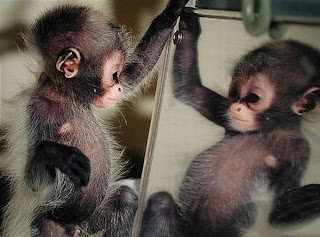
In Mary Marcil's bog, she talks about the discussion we had in class pertaining to human and animal pain/suffering. If we experience a headache, we are in pain which turns into suffering. That suffering still exists even if we are too distracted to notice. The question was whether animals experience the same thing. Can they be aware of themselves but get distracted from their awareness? Mary finds this believable, especially when the memory spans of an animal are taken into consideration. She says, "It is ompletely reasonable that they might forget they are aware in order to focus on something important like escaping a predator or feeding their young." If an animal has a short memory span, it is possible that they were aware, at one point, of their pain even if it does not last very long. Mary asks, "Are there times when we can absolutely tell if an animal is self-aware?"
Like in the video we watched in class, we know animals are self-aware if they look into a mirror and realize the image is of themselves. Dolphins, apes, and elephants are certainly self-aware but it is hard to tell if other animals are as well. When an animal grooms itself, it is aware of itself been groomed. Also, when one animal wants to prove to another its affection, most of the time, if it is a mammal or a bird, it shows this by by grooming that animal. Sometimes, when animals are feeling stress, they take it out in themselves, much like humans do. Parrots pluck their feathers and dogs chase and chew their tails. These are signs of self-punishments that can only be seen in beings with a developed sense of the self. Self awareness is proven through animal behaviors such as status, pride, self esteem, territoriality, self punishment, self love, supremacy, and submission. It is complicated to know for sure which animals are self aware, but by simple observations, sometimes we just know they are more aware than they let on.
My question to you is: What makes some animals seem more self aware than others and in what ways does the intelligence level of an animal relate to self awareness?

Animal Confinement and Consciousness.
Today, when I was walking back to my townhouse, I saw a student come out of her car with a goldfish and a small bowl to keep it in. I wanted to ask her if she would like to live in such a small space but I refrained from doing so. Instead, I came back to my laptop to blog about it. Many people are uninformed as to what animals (especially fish) need in order to live comfortably and contently. Sure, some people would say that it does not matter because fish are not conscious of themselves or their surroundings. However, I do not think we could ever know what a fish is really thinking so I am just going to assume no one would want to live in a half gallon bowl. I am not against owning fish. I actually have a two year old beta who resides in my townhouse with me. Unless the world population organizes a revolt against breeding fish, then there is nothing we can really do besides give them a home and what they need. People just need to know how to care for their pets.
Animals and humans are different, but both deserve freedom and respect. Throughout history, there has never been an animal species that gave other animals so little space as humans do today. By confining animals to a specific designated space, they are not able to express their natural behavior. Some people do think, for obvious reasons, that putting a fence around a pasture to make sure the animals do not escape into the road is a reasonable action. Also, humans have a right not to be 'bothered' by animals that live next door or down the street. People expect others will keep their pets under control, their dogs on a leash, their fish in a tank, their cows in selected pastures, etc. In this sense, freedom is bound by borders but these borders are needed for legal reasons. But where is the limit as to how confined an animal/pet should be? If animals are truly conscious of themselves and can experience happiness, then they should have the right to their own property and space. After all, it is not in a dog's nature to be locked in a cage all day while his or her owner is at work. It needs to get exercise just like humans. The same goes for all animals. Humans do not like to be confined to only a certain space, so I raise the question as to whether animals should be confined and, if so, how much space is enough for them to experience and enjoy their lives?
My question to you is: Do you think human beings should have the right to confine animals? If so, how much space does an animal have the right to occupy?

Animals and humans are different, but both deserve freedom and respect. Throughout history, there has never been an animal species that gave other animals so little space as humans do today. By confining animals to a specific designated space, they are not able to express their natural behavior. Some people do think, for obvious reasons, that putting a fence around a pasture to make sure the animals do not escape into the road is a reasonable action. Also, humans have a right not to be 'bothered' by animals that live next door or down the street. People expect others will keep their pets under control, their dogs on a leash, their fish in a tank, their cows in selected pastures, etc. In this sense, freedom is bound by borders but these borders are needed for legal reasons. But where is the limit as to how confined an animal/pet should be? If animals are truly conscious of themselves and can experience happiness, then they should have the right to their own property and space. After all, it is not in a dog's nature to be locked in a cage all day while his or her owner is at work. It needs to get exercise just like humans. The same goes for all animals. Humans do not like to be confined to only a certain space, so I raise the question as to whether animals should be confined and, if so, how much space is enough for them to experience and enjoy their lives?
My question to you is: Do you think human beings should have the right to confine animals? If so, how much space does an animal have the right to occupy?

Subscribe to:
Posts (Atom)